Atomic Research, From Spreadsheet to AI-Augmented Dashboard
Rebuilt my hand-built qualitative research system as an AI-augmented dashboard. 10-30× faster atomization on the same source material, with human-in-the-loop quality control.
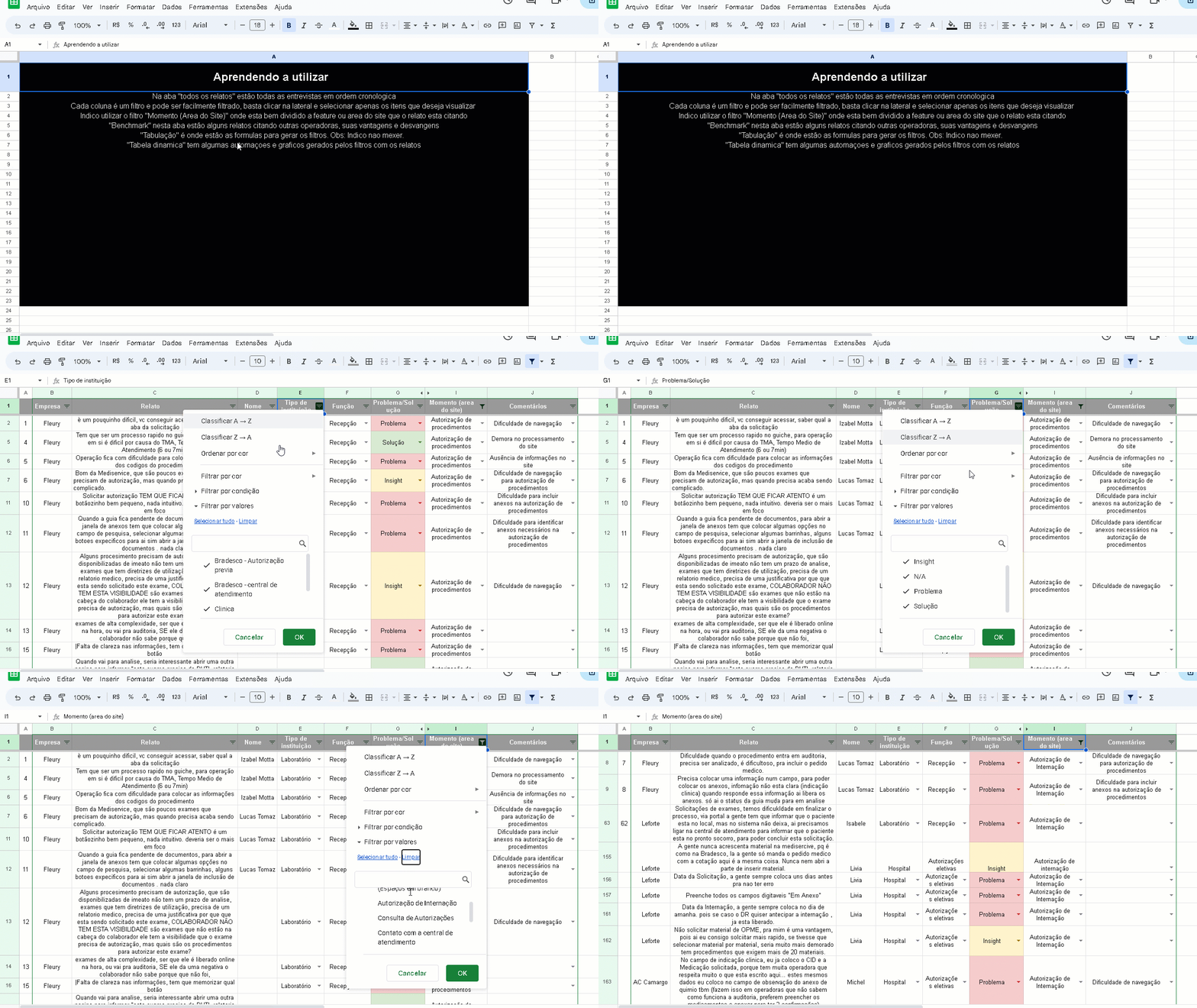
2023-2024: I atomized 195+ user-interview quotes by hand into a Google Sheets system, across healthcare research projects (Bradesco/Mediservice, Fleury, AC Camargo, Leforte, BP).
2026: I rebuilt the same workflow as a Notion database with an LLM agent. Same atoms. Different throughput.
This isn't a tooling story. It's the bridge between two halves of my career, the qualitative practice I built as a researcher is exactly what I now scale with AI.
Context
Atomic Research is a synthesis method from Daniel Pidcock (2018) that decomposes qualitative research into reusable, atomic units. Instead of writing a 30-page report that gets read once and filed, you split findings into the smallest reusable evidence, a quote, an observation, a metric, each tagged so it can be re-queried across projects.
I've been working this way since 2023, long before "AI for research" was a category. The same logical structure that made it powerful by hand is exactly what makes it composable with LLMs now.
The atom, the unit that travels
Every insight in the system is built from a primitive unit: the atom. Source-tagged, theme-tagged, confidence-tagged. A quote that fed a procurement decision in healthcare can be re-queried for an AI-product feature three years later, without rereading the transcript.
Why this matters
Qualitative research has a chronic problem: insights get trapped in their original deliverable. A user quote that's gold for a procurement decision in one project might be perfectly relevant to a healthcare-onboarding question two years later, but it's buried in a PDF in a folder no one opens.
Atomic Research solves the trap by treating insights as data. That's what makes it AI-ready by construction.
Two systems, ten years apart
Same logical model. Different throughput.
Google Sheets
- Atoms195+
- Projects5 healthcare
- Atomizationmanual
- Per atom~12 min
- Per projecthours
- Throughputbounded by hands
Notion + LLM agent
- Atomssame structure
- Projectsscaling
- AtomizationLLM proposes
- Per atom~30 sec review
- Per project10-30× faster
- Qualityhuman-in-the-loop
System 1, Sheets (2023-2024)
Built as a working Google Sheets system during healthcare-research consulting engagements.
Scope: 195+ atomized quotes across multiple projects, Bradesco/Mediservice, Fleury, AC Camargo, Leforte, BP and others.
Structure per atom:
- Verbatim quote
- Source (interview ID, participant role, project)
- Tags (theme, journey stage, pain/gain)
- Confidence
- Linked insight
What it unlocked:
- Same atom could feed multiple insights across projects
- Re-querying past research without re-reading every transcript
- Faster synthesis cycles, from "what did users say about X?" to a filtered view in seconds
- A research library that compounded with every project
The limit: scaling required time. Each interview meant hours of manual atomization. The method was right; the throughput was bounded by a single researcher's hands.
System 2, Notion + LLM agent (2026)
Rebuilt the same logical model as a Notion database with an LLM agent doing the heavy lifting.
The structure didn't change. Each atom still has source, tags, theme, confidence, link to parent research. What changed is who does the atomization.
The LLM agent reads transcripts and proposes atoms. I review, refine, and approve. Bad atoms get caught and corrected, the human-in-the-loop is where the rigor lives. The agent isn't replacing judgment; it's removing the typing.
What it unlocks now:
- 10-30× faster atomization on the same source material
- Cross-project queries that used to require a custom view now take a Notion filter
- Research stays a living asset instead of becoming archive
The principle: the method's correctness is what makes it AI-compatible. If the method had been "vibes-based clustering," there would be nothing for the agent to do. Because the unit (the atom) was already well-defined, the model has a target it can hit.
What I'd flag in an interview
The method was AI-ready before AI was ready. I didn't pivot from manual to AI-assisted research because AI showed up. I pivoted because the practice I'd been doing for years was a well-defined function, and a well-defined function is what an LLM can usefully extend.
Human-in-the-loop isn't a buzzword, it's where the rigor lives. The LLM proposes; I disagree often. That friction is the system, not a flaw in it.
Throughput, not method, is what scaled. A researcher who jumps to "AI replaces research" misses the point. The atom is still the unit. The skill is still naming what matters in qualitative data. AI moves the bottleneck, it doesn't remove it.
Constraints + what's still on the table
The 2026 system is live and running but not productized. It's mine, for my work. There's a clear path to turning it into a tool for other UX teams (multi-tenant, evaluation rubrics, taxonomy templates) but that's a different project.
If I did this again today from scratch, I'd start with the LLM in the loop on day one and build the taxonomy alongside the corpus, rather than retrofitting old taxonomies onto a new tool.
Why this case sits here
Atomic Research is the through-line of my career. It's the discipline that made me good at qualitative research, and it's the discipline that made the AI pivot feel like continuity rather than rupture. Same method, two systems, ten years apart, and the second exists because the first was built carefully enough to be re-expressed.